Every year, children in Sydney end up in hospital after falling from windows. Some don’t survive. The NSW Government responded with window safety regulations that have been in place since 2013, yet many strata managers and owners corporations still aren’t fully compliant. If you manage a residential strata building in NSW and haven’t thought about window safety compliance recently, you’re not alone–but you could be exposed to serious liability. This guide covers everything you need to know about NSW window safety laws, your obligations as a strata manager, and how to ensure your building meets the legal requirements.
The Law That Changed Everything: NSW Window Safety Regulations
Section 118 of the Strata Schemes Management Act 2015 requires owners corporations to fit complying window safety devices to openable windows where the lowest part of the window opening is less than 1.7 metres above the floor inside, and that floor is more than 2 metres above the ground outside. The deadline for compliance was 13 March 2018, and the requirement applies to every NSW strata scheme — whether or not children currently live in the building. The regulation exists because a child falling from even a first-floor window can suffer fatal injuries, and countless preventable accidents have occurred in NSW over the past decades.
The regulation doesn’t distinguish between owner-occupied units and rented apartments. It doesn’t matter if the building is new or 50 years old. If the geometric conditions are met, window safety devices must be installed and maintained. The law sets the performance test: a complying device must restrict the window opening so a 125mm sphere cannot pass through, and must be strong enough to resist 250 newtons of force. AS 5203-2016 is the Australian Standard that sets out how to test windows against exactly those requirements — so make sure your building’s inspection is tested in line with it, and that the report documents both the opening and the force results.
Who Is Responsible Under the Strata Schemes Management Act 2015?
The Strata Schemes Management Act 2015 makes it clear that an owners corporation (OC) is responsible for the maintenance and repair of common property, which includes common windows. As a strata manager, your primary duty is to advise the owners corporation of its obligations and to ensure those obligations are met. If an accident occurs and it’s found that the building wasn’t compliant with window safety regulations, the OC can be held civilly liable, and individual committee members may face personal liability depending on the circumstances.
The strata manager doesn’t have to personally install restrictors, but you do have to ensure that the inspection regime is in place, that annual inspections happen, and that any non-compliant windows are remediated promptly. Fair Trading NSW views strata managers as gatekeepers in the compliance chain. If you’re managing a building and you haven’t arranged a window safety inspection in the past 12 months, that’s a compliance gap you need to address immediately.
What Buildings Must Comply?
The window safety regulations apply to all residential strata buildings in NSW with common property windows that meet the geometric criteria. This includes apartment complexes, townhouse developments, villa units with shared windows, and any multi-unit residential building. It also includes commercial buildings that have residential tenants. The regulations don’t care about the size of the building; a small three-storey townhouse with just six units is subject to the same requirements as a 50-storey apartment tower.
What matters is the specific window. Not every window in a building needs a restrictor. Windows on upper floors where the sill is already high enough above external ground don’t need devices. Ground-floor windows in high-rise buildings with deep balconies might be above the 2-metre external ground threshold. Each window needs individual assessment. This is where certified inspectors earn their qualification–they know how to measure correctly and determine which windows genuinely need devices and which don’t.
What Does Compliance Actually Look Like?
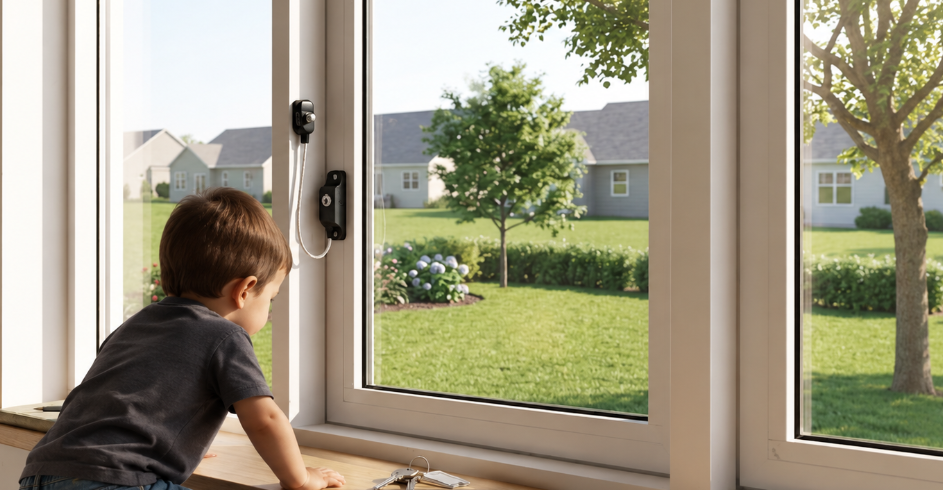
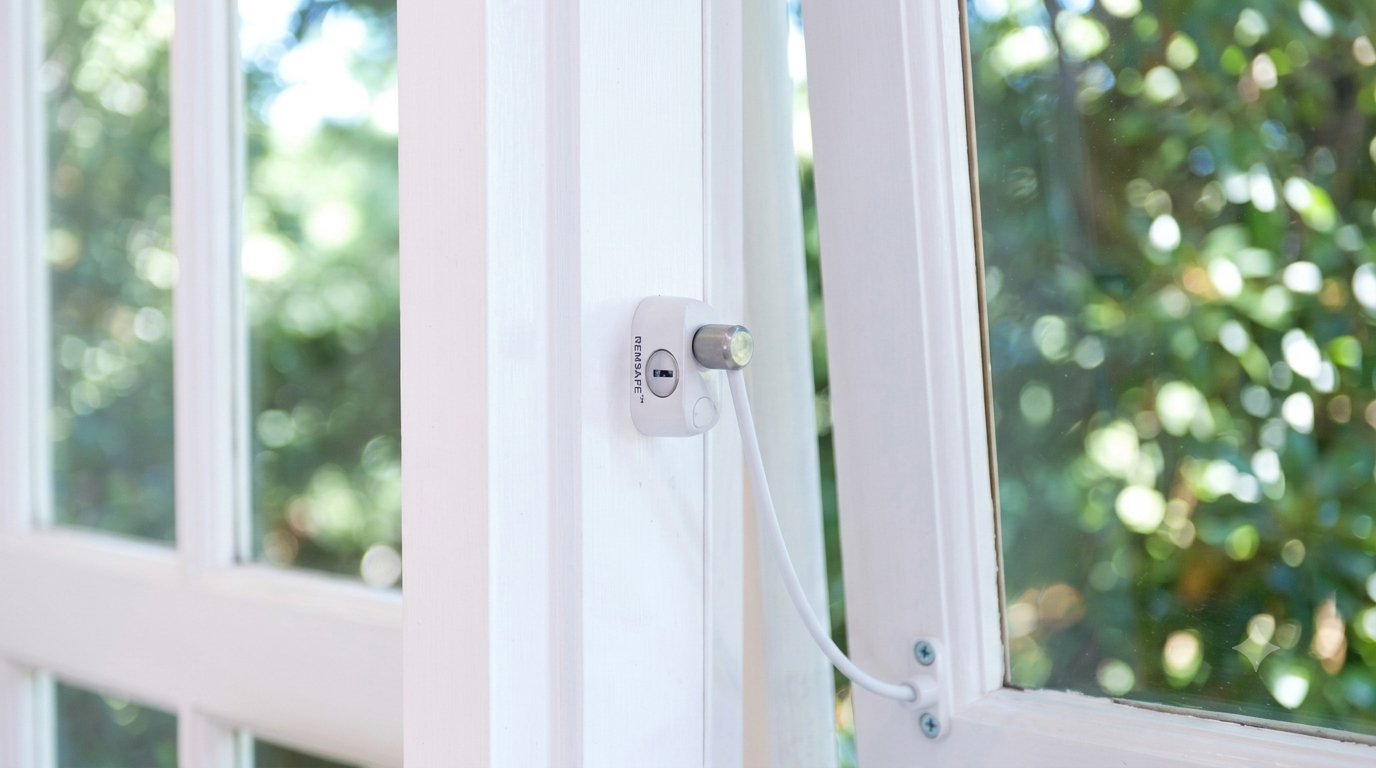
Compliance means that every window requiring a device has an approved window restrictor installed and functioning correctly. The device must meet the legislated performance requirements: with the device engaged, the opening must not allow a 125mm sphere to pass through, and the device must be able to resist 250 newtons of outward force — roughly a 25-kilogram push. It must be competently installed into sound frame material and documented in a written inspection report specific to the building.
A compliance certificate should detail which windows were inspected, which devices were installed or verified, testing results, and the period of validity (typically 12 months for annual inspections). The certificate should be specific to your building. Generic certificates are worthless as evidence if the building’s compliance is ever questioned. Your building’s certificate must show the property address, the inspection date, the standard to which the inspection was conducted, and the inspector’s qualifications.
Annual Inspection Requirements Explained
The owners corporation’s duty under section 118 is ongoing — devices must be present and working at all times, not just on the day they were installed. An annual inspection is the accepted way to meet that duty and to prove it. The reason is straightforward: window restrictors wear out, get damaged, get removed by residents, or break due to weathering and regular use. A restrictor that passed inspection last year might be broken this year. Annual inspections catch these failures and ensure remediation happens before an accident occurs.
If devices have failed and nobody has checked, the owners corporation is in breach of its duty — whether anyone has noticed or not. If a child is injured and it’s discovered that nothing had been checked for years, the building’s insurance position is at serious risk and the OC faces the liability. The inspection itself takes a few hours for a typical building and costs far less than legal fees or a settlement. The report must be kept with the strata records, which the Act requires to be retained for at least 7 years.
What Happens If Your Building Is Non-Compliant?
Failing to comply with section 118 is an offence, though the statutory fine for the owners corporation is modest — currently a maximum of $550. The fine was never the real deterrent. The serious consequences of non-compliance sit in civil liability and insurance. Beyond regulatory penalties, the OC faces civil liability. If a child is injured due to a non-compliant or missing window restrictor, the injured party (or their parents) can sue the OC for damages. These claims can run into hundreds of thousands of dollars.
Insurance is another issue. Many building insurance policies include exclusions for non-compliance with statutory obligations. If your building isn’t compliant and a claim is made, the insurer can refuse to pay, leaving the OC exposed. Additionally, many insurance underwriters now specifically ask about window safety compliance when renewing policies. Non-compliance can result in higher premiums, policy cancellation, or inability to obtain cover at all.
How to Get Your Building Compliant Fast
The process is straightforward and can often be completed in a single day. First, contact a certified window safety inspector who operates in your area. Haven Compliance, based in Sydney, covers all Sydney suburbs and can usually arrange an inspection within a week. During the inspection, the inspector assesses every window in the building, identifies which need restrictors, tests existing devices, and measures opening gaps and forces.
Based on the inspection findings, any non-compliant or missing restrictors are installed. Many inspectors also offer installation services, so remediation can happen immediately. Once all work is complete, the inspector issues a compliance certificate valid for 12 months. The entire process–inspection, installation, and certification–typically takes one to three days depending on building size. You then have a valid certificate to file with your strata records and to show Fair Trading NSW if audited.
5 Questions Strata Managers Ask Us Every Week
Q1: Do we really need to inspect every single window in the building?
A: No, only windows that meet the criteria–sill height less than 1.7m internally and more than 2m externally above ground. A certified inspector will identify which windows need assessment. In a 10-storey apartment building, ground-floor windows might need devices but upper floors often don’t. The inspector’s job is to make that determination correctly.
Q2: Can we just install restrictors on all windows to be safe?
A: Technically yes, but it’s unnecessary and costly. The regulation specifies which windows need devices based on geometry. Installing them on windows that don’t meet the criteria wastes money and can affect window operation. Compliance means meeting the regulation, not exceeding it unnecessarily.
Q3: What if individual lot owners refuse access for inspection?
A: The OC can issue a notice requiring access under the Strata Schemes Management Act. If access is still refused, the OC can apply to the NSW Civil and Administrative Tribunal (NCAT) for an order. In practice, most residents cooperate once they understand why the inspection is needed. Framing it as child safety rather than bureaucratic compliance helps.
Q4: Can we do inspections every two years to save money?
A: It’s a false economy. The owners corporation’s duty is continuous, and a device can fail at any time — the longer the gap between checks, the longer a failure sits undetected and the weaker the building’s records look. Annual is the accepted discipline because conditions genuinely change year to year. However, bundling inspection and any necessary remediation can reduce per-visit costs compared to separate visits.
Q5: Do we need a new certificate every year even if nothing changes?
A: Yes — get one each year. Even when nothing has changed, the fresh report is what proves the devices were checked and working at that date. That is exactly what insurers, buyers’ lawyers and Fair Trading NSW expect to find in strata records.
Next Steps
If your building hasn’t had a window safety inspection in the past 12 months, you have a compliance obligation to address immediately. Our certified inspectors cover all Sydney suburbs, provide same-day certificates, and can often handle both inspection and installation in a single visit. Don’t let compliance become a liability issue–take action now.