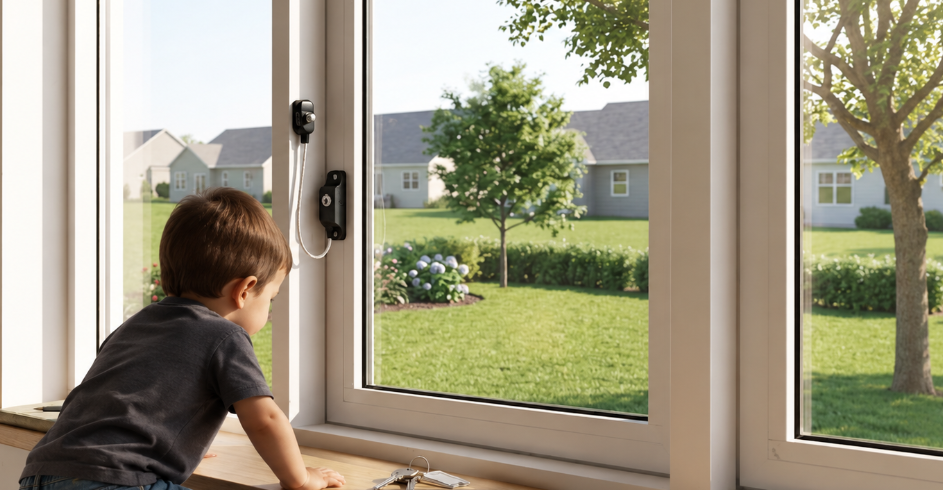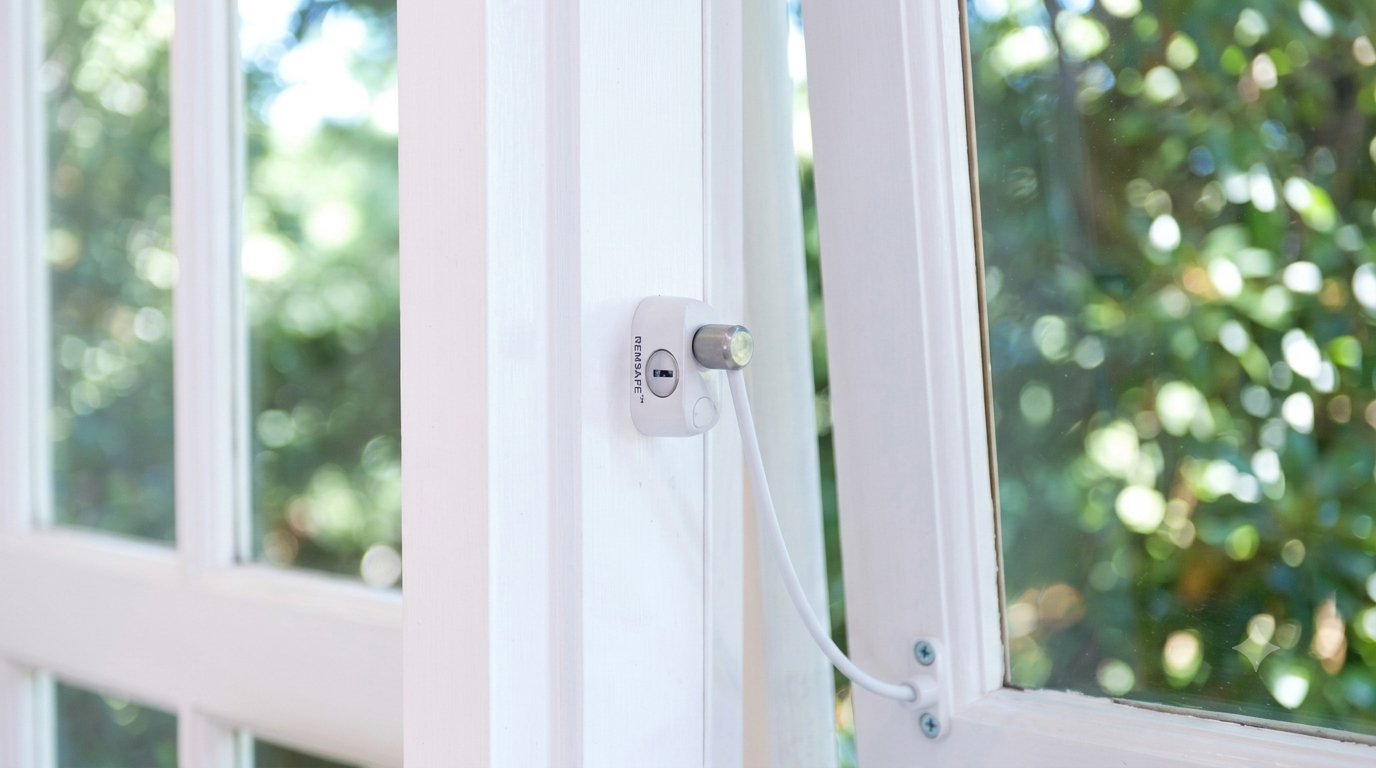
In NSW strata buildings, window safety devices are usually an owners corporation issue. NSW Government guidance says owners corporations are responsible for installing and repairing child window safety devices on the windows that the law covers — and that responsibility cannot be delegated away by assuming a previous committee, a builder or a resident dealt with it. But ‘usually the OC’ is not the whole picture, and the gaps in the detail are exactly where buildings get caught.
This article sets out who is responsible for what, where strata managers, landlords and tenants fit, and why the responsibility question is ultimately answered by documentation.
Who carries the statutory duty?
Section 118 of the Strata Schemes Management Act 2015 required every NSW owners corporation to fit child window safety devices to relevant openable windows by 13 March 2018. The covered windows are broadly those above the ground floor where a child could reach the opening. A compliant device must restrict the opening to less than 125mm when engaged and resist 250 newtons of outward force.
The duty includes maintenance and repair: the OC must ensure the devices remain in place and working, not merely that they were installed once before the deadline. Two points follow directly. First, an owners corporation that has never verified its devices since installation is carrying an unexamined statutory duty — the deadline was years ago, and hardware ages.
Second, ‘we thought the developer handled it’ or ‘the previous managing agent had it under control’ is not a defence; the duty sits with the OC continuously.
Owners corporation vs lot owner: who pays, and when?
The default position is that the owners corporation installs, maintains and pays for the devices required by section 118, on both common property and lot windows the law covers. The main variation involves
owner-installed devices: a lot owner is entitled to install their own child safety devices on their windows (with notice to the OC, and the work done competently). Where an owner has done so, the owner is responsible for maintaining and repairing what they installed.
In practice most buildings had devices installed building-wide under the OC’s compliance programme, so OC responsibility is the operating reality — but a building with a history of owner-installed devices needs its records to show which windows are whose, or every future repair becomes a negotiation. By-laws can add detail around cost allocation and process, and committees sometimes resolve specific arrangements. None of that displaces the statutory floor: if a covered window lacks a working device, the owners corporation is the entity holding the legal problem.
Where do strata managers fit?
The strata manager is not the duty-holder, but is almost always the person through whom the duty is discharged: advising the committee that the obligation exists, arranging inspections, coordinating access, presenting defects and quotes for approval, chasing rectification, and keeping the records. A strata manager cannot make an OC comply — committees control the spending — but a manager who cannot show they advised, arranged and documented has a professional exposure of their own if an incident occurs. The manager’s protection and the building’s protection are the same thing: a complete file.
What about landlords and tenants in strata units?
For tenanted lots, the layers stack. The OC remains responsible for the section 118 devices. The landlord owes the tenant a habitable, reasonably safe premises and should ensure defects are reported into the OC and pursued.
Tenants cannot be expected to verify compliance, but they are the people most likely to notice a broken restrictor or missing key — and the people most likely to remove a device for ventilation and forget it.
Property managers handling strata rentals should report device defects to the strata manager in writing and keep the trail; a landlord who reported a defect and pressed for repair is in a very different position afterwards from one who ignored it.
Why does responsibility need to be documented?
Responsibility questions are ultimately settled by records. When something goes wrong, the questions asked are concrete: When were the devices last inspected? What was found?
What was repaired, and who verified it? Which units were never accessed? If the building’s records are missing or incomplete, nobody can answer — and an OC that cannot demonstrate its compliance history is treated, practically speaking, as non-compliant regardless of the state of its hardware.
Where records are missing, the fix is a fresh baseline: a full inspection that establishes, lot by lot and window by window, what devices exist, what condition they are in, what defects need repair, and where access could not be obtained. From that baseline forward, the building has an answerable file.
What should owners corporations ask for?
Not every document called a compliance report does the job. A certificate-style page saying ‘inspection completed, building compliant’ answers none of the questions above. OCs should insist on detailed reporting: which lots and common areas were inspected, per-window results, defects photographed and located precisely, inaccessible units listed separately, recommended rectification, and — after repairs — reinspection evidence showing closure.
The difference matters exactly when the report matters: under scrutiny after an incident, a detailed report is evidence; a certificate is a claim.
When should you book a new inspection?
- There is no current inspection record, or nobody can locate one — the building needs a baseline.
- Before the AGM or annual compliance review, so the OC reports from evidence rather than assumption.
- After a change of strata manager, when records commonly go missing in handover.
- After rectification works, to verify and document that defects were actually closed.
- After a resident complaint or a noticed defect — one broken device usually has siblings.
- When previous inspections show units that were never accessed, and the gap was never followed up.
Three Disputes We See — and How They Resolve
Access refused. A lot owner will not let the inspector in, so the OC’s record has a hole exactly where its duty applies. Resolution: the OC issues a formal access notice under the Act, and NCAT can order access if refusal continues.
What the OC must be able to show is the paper trail — notices sent, attempts made — so the gap in coverage is documented as the resident’s obstruction, not the OC’s neglect. The owner-installed device that failed. An owner fitted their own restrictors years ago; inspection now finds them non-compliant.
The owner argues it is the OC’s problem; the OC argues the reverse. Resolution: where the owner installed the devices, the owner maintains them — but the OC’s duty to ensure covered windows are protected does not vanish while the argument runs. The practical path is the one we recommend every time: fix first on the OC’s programme, resolve cost allocation second, because the liability clock runs on the open defect, not on the dispute.
The investor pointing at the OC. A tenant reports a broken device; the landlord’s property manager assumes strata will handle it; strata assumes it was reported into the maintenance system; nobody actions it.
Resolution: report defects in writing to the strata manager with a named recipient, follow up on a date, and escalate to the committee if it stalls.
Every party in that chain is protected by the same thing — evidence they passed the issue forward and pressed it.
What happens when nobody takes responsibility?
The failure mode worth naming is diffusion: the committee assumes the strata manager has it handled, the manager assumes the devices installed in 2018 are fine, owners assume the levies covered it, and the building drifts for years with no inspection at all. Nothing about that drift is visible until an incident, an insurance renewal question, or a Fair Trading enquiry makes it visible all at once. The building that breaks the cycle is simply the one where someone — usually the strata manager — puts an annual inspection on the calendar and lets the programme run.
Practical Wording for Strata Committees
If you need to move a committee to act, skip the statute citations and use plain terms: ‘The owners corporation needs a current record showing that relevant window safety devices have been inspected and any defects have been followed up. We don’t currently have that record. Here is a quote to establish it.’ Most committees say yes to that sentence — it is specific, bounded and obviously reasonable.
Frequently Asked Questions
The owners corporation, under section 118 of the Strata Schemes Management Act 2015 — for lot windows as well as common property, in every residential scheme in the state.
Yes, at their own cost and with notice to the owners corporation — provided the devices genuinely comply: 125mm maximum opening or a robust screen, holding 250 newtons.
The duty belongs to the owners corporation, but the manager is its adviser — identifying gaps in writing and recommending inspection is what diligent management looks like on paper.
Owners can escalate through the committee, NSW Fair Trading and the strata dispute process. A written inspection report usually resolves the question long before that becomes necessary.
Close the Loop
Haven Compliance provides window safety inspections for NSW strata buildings, with photographic per-lot reporting, rectification through our repair partners including REMSAFE hardware, reinspection of completed works, and annual records maintained so the responsibility question always has a documented answer. If your owners corporation needs a current window safety inspection record, request a quote.