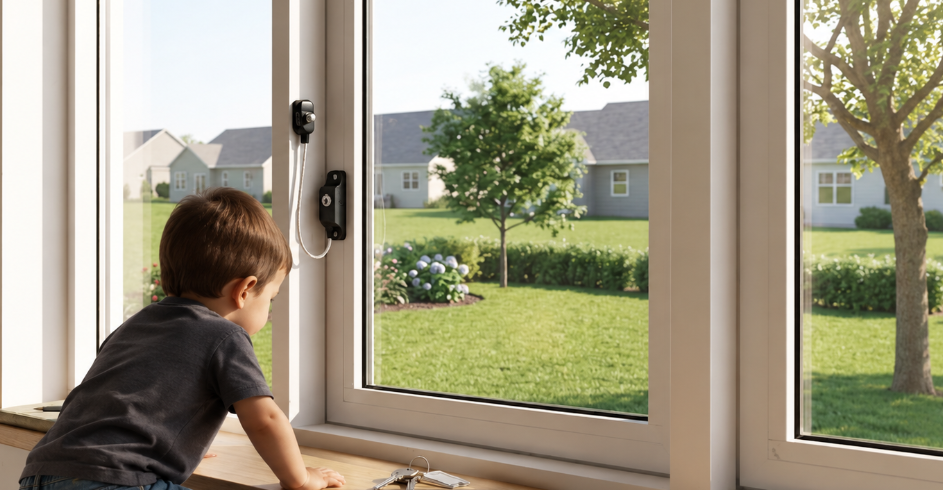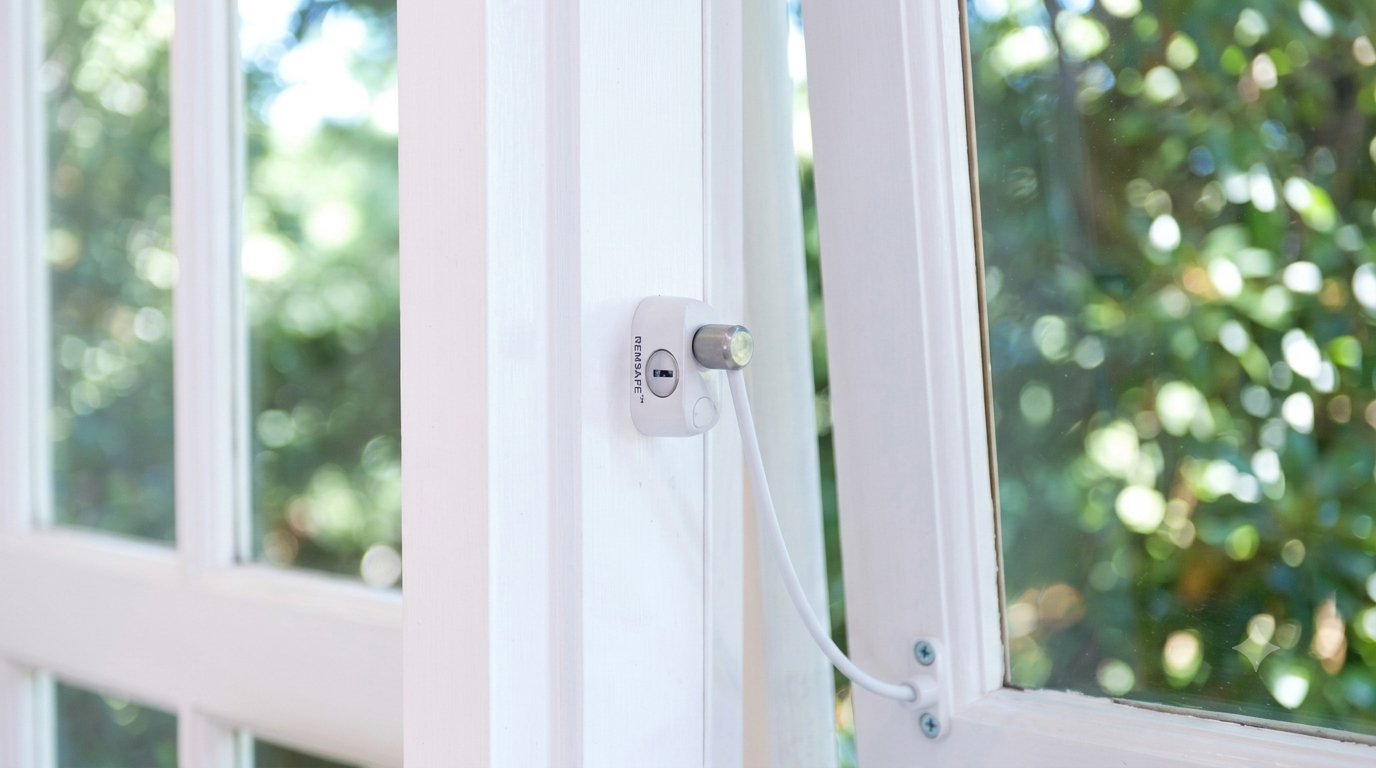
Window safety defects are often small, but they matter. A device may be present without being reliable. A report may exist without showing whether defects were ever fixed.
In our inspections across Sydney strata buildings, the pattern is remarkably consistent: it is rarely one catastrophic failure that puts a building at risk. It is an accumulation of small, unglamorous problems — a loose screw here, a missing key there, a unit that was never re-checked after repairs — that quietly erodes a building’s compliance position until the day someone needs to rely on it. This article covers the window lock and restrictor failures we find most often during inspections, why apparently minor defects carry real legal weight, and the process changes that stop the same failures reappearing year after year.
What does NSW law actually require of a window safety device?
Under section 118 of the Strata Schemes Management Act 2015, owners corporations in NSW have been required to install child window safety devices on relevant openable windows since 13 March 2018. A compliant device must be capable of restricting the window opening to less than 125mm when engaged, and it must be able to resist an outward force of 250 newtons — roughly the equivalent of 25 kilograms pushing against it. Both conditions must hold at the moment of testing, not just on the day the device was installed.
That last point is the one buildings miss. Compliance is a present-tense condition. A restrictor that met the standard when it was fitted in 2018 but has since worked loose, corroded, or lost its key does not meet the standard today.
Every failure in the list below is, at its core, a gap between what was installed once and what actually functions now.
Which window lock failures do we find most often?
Across hundreds of inspected windows, the same defects come up again and again:
- Missing devices entirely — windows that meet the height criteria but were skipped during the original installation, often in less obvious locations such as stairwell landings, laundries or bathrooms.
- Loose fixings — screws that have worked loose from the frame so the device pulls away under load. The device looks installed; it would not hold 250 newtons.
- Damaged or deteriorated timber — restrictors anchored into rotted, split or water-damaged frames. The hardware is sound but the substrate cannot hold it.
- Corroded hardware — coastal and older buildings especially. Corrosion seizes mechanisms, weakens cables and chains, and makes force resistance unpredictable.
- Missing keys — key-operated locks where nobody can locate the key. If the device cannot be engaged, operated and tested, it cannot be verified as compliant.
- Devices disengaged or removed by residents — restrictors unscrewed, cable restrictors unclipped, or locks left permanently open for ventilation or cleaning and never re-engaged.
- The wrong device doing the job — flyscreens, standard latches or security fittings being relied on as safety devices when they were never designed or tested to restrict opening to 125mm under 250 newtons of force.
- Openings that exceed 125mm with the device engaged — worn cables, stretched chains or badly positioned fittings that allow the sash to travel further than the limit.
- No reinspection records — defects identified in a previous report with no documentation showing they were ever repaired, and no evidence anyone went back to verify the fix.
Why do small failures matter so much?
None of these defects looks dramatic. A loose screw or a lost key feels like a maintenance footnote, not a compliance event. But the legal test does not grade on effort.
If a window that should be protected can open beyond 125mm, or its device gives way under force, the building is non-compliant at that window — regardless of how much was spent on installation years earlier. The consequences compound. If a child is injured at a window with a known, unrepaired defect, the owners corporation’s position is far worse than if no inspection had ever happened: the record shows the OC was told about the problem and did not close it out.
Insurance is the second exposure. Building policies commonly exclude losses arising from non-compliance with statutory obligations, and insurers increasingly ask about window safety compliance at renewal. A defect register full of open items is exactly what an insurer’s assessor looks for after an incident.
This is why compliance requires the complete pathway — identification, photographic documentation, repair, and reinspection — not just an annual walk-through. A defect that is found, photographed, fixed and verified is a demonstration of due diligence. A defect that is found and forgotten is evidence of negligence.
What is the most overlooked failure? Units you couldn’t access
The single most common gap in building records has nothing to do with hardware. It is the units nobody got into. In almost every large-building inspection, some percentage of lots are inaccessible on the day — residents are out, tenants did not receive the notice, keys are not where they should be.
The failure is not the missed access itself; that is normal. The failure is what happens next: the inaccessible units quietly disappear from the record, and the building’s file reads as though the inspection covered everything. A defensible record does the opposite.
It lists exactly which lots were inspected and which were not, and it shows a follow-up plan for the gaps. Haven’s reports separate inaccessible units into their own schedule precisely so they cannot be overlooked. The strata manager can see at a glance what remains outstanding and book targeted follow-up visits rather than waiting a full year for the next inspection cycle.
Which warning signs can managers spot between inspections?
You do not need to be a certified inspector to notice that something needs attention. These observable signs warrant action rather than a note to deal with it later:
- Windows that have become stiff, or conversely swing open freely where they used to stop.
- Restrictor keys that nobody can find, or residents mentioning they removed a device to clean the windows.
- Windows visibly opening further than about the width of an adult fist — a rough proxy for the 125mm limit.
- Locks that no longer catch, or catch only when the sash is lifted and jiggled.
- Visible corrosion, cracked frames, or fixings sitting proud of the timber.
- A previous inspection report with no photographs, no unit-by-unit detail, or defect items with no matching repair record. Any of these justifies a call to your inspection provider. None of them justifies waiting until the next AGM.
Why are documentation failures compliance failures?
A recurring theme in the list above is paperwork, and that is deliberate. In practice, a building’s compliance position is only as strong as its records. When Fair Trading NSW, an insurer or a lawyer examines a building after an incident, they reconstruct events from documents: what was inspected, what was found, what was repaired, and what was verified.
If the evidence is scattered across contractor invoices, email threads and a strata manager’s memory, the building effectively has no record — even if the work was actually done.
How do you reduce repeat failures?
Buildings that stay compliant year after year tend to run the same simple disciplines:
- One consistent report format each year, so results can be compared window-by-window across inspections.
- A defect register that stays open until each item has a repair date and a reinspection result against it.
- Photographs of every defect at identification and again after rectification.
- A single storage location for reports, quotes, completion records and reinspection notes — held with the building’s records, not an individual’s inbox.
- A scheduled annual inspection date, booked before the current year’s record expires rather than after someone notices it has.
- None of this is complicated. It is the difference between compliance as an event and compliance as a system
- and buildings with a system rarely appear twice on our defect lists for the same problem.
What does good rectification look like?
Finding defects is the easy half. Closing them properly follows a pattern: the repair matches the actual failure mode (a loose fixing re-anchored into sound material, not just tightened into stripped timber; a corroded device replaced, not oiled); the repaired window is physically re-tested against the 125mm and 250N standard, not signed off from an invoice; and the closure is recorded with an after photograph beside the before photograph. Where the substrate is the problem — rot, split frames — the carpentry gets fixed first, because a new device in a failed frame is the same defect wearing new hardware.
Timing matters too. Rectification within 30 days of the report is the practical benchmark; a defect that stays open across two annual reports is, from a liability perspective, a known hazard the owners corporation sat on for a year. If a quote is stuck in committee, that is a scheduling problem worth escalating — not a reason the defect register stays open.
Frequently Asked Questions
Loose or corroded fixings on otherwise correct devices — hardware that looks compliant but releases under a fraction of the required 250 newtons. It is found by load testing, never by looking.
Easily. Fixings loosen with use, coastal air corrodes mechanisms, tenants disengage restrictors, and renovations remove devices entirely — which is why annual retesting across Sydney buildings is prudent best practice.
No. Ordinary insect screens fail the 250 newton force test. Only a device restricting the opening to 125mm or less, or a robust screen built to hold 250N, satisfies section 118.
The owners corporation carries the section 118 duty across the whole building, including lot windows. Failures are typically quoted per window and remediated as one program — see our window restrictor installation service for how that runs.
Why Haven’s Process Is Different
Haven Compliance built its inspection process around the failure patterns in this article. Every inspection follows the full pathway — inspection, photographic report, rectification support, and reinspection — so defects are closed out with evidence rather than left as open items in a PDF nobody rereads. Inaccessible units are tracked in their own schedule, defects are documented with photos and plain-language descriptions, and we work with rectification partners so repairs and verification can happen without the strata manager chasing three separate contractors.
If your building’s last report is more than 12 months old, has open defect items, or does not clearly show what was and wasn’t accessed, it is time to re-establish the baseline. Book a comprehensive window safety inspection with Haven Compliance.
Related reading
- Window Safety Device Inspection Checklist For Strata Managers
- The 125mm Window Opening Rule And 250N Test Explained
- Window Restrictors vs Window Locks: Which Does Your Sydney Building Need?
- Book this service: Window Lock Compliance Certificates
- Annual Window Safety Re-Certification Program — Sydney & NSW