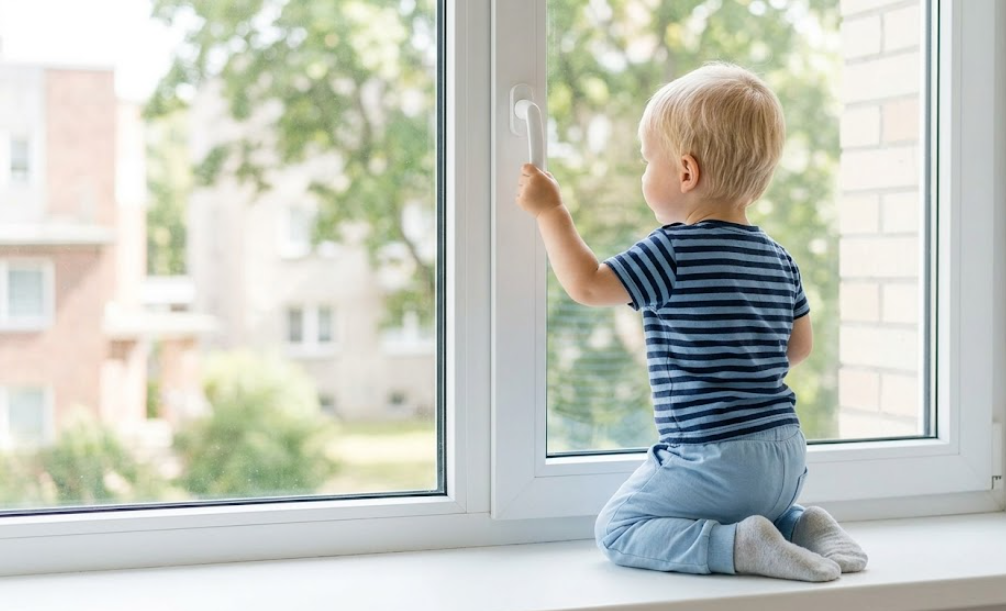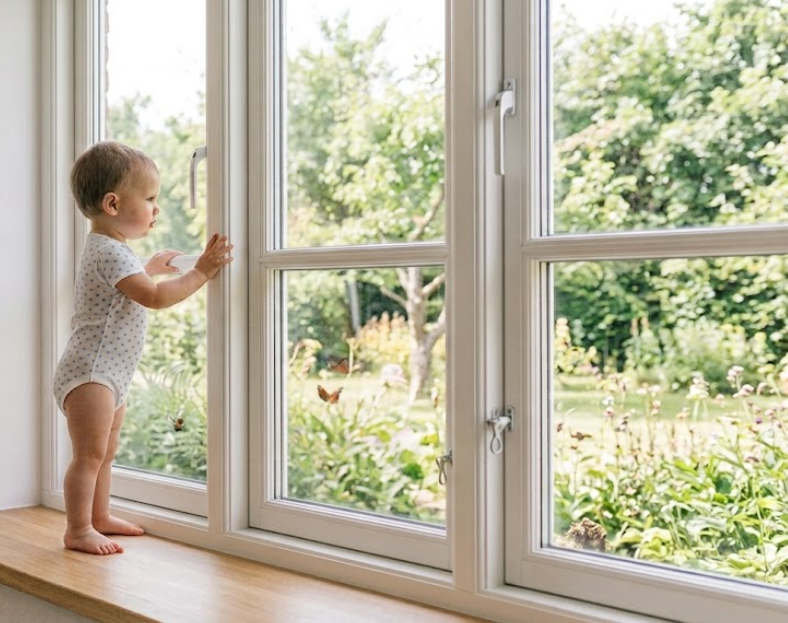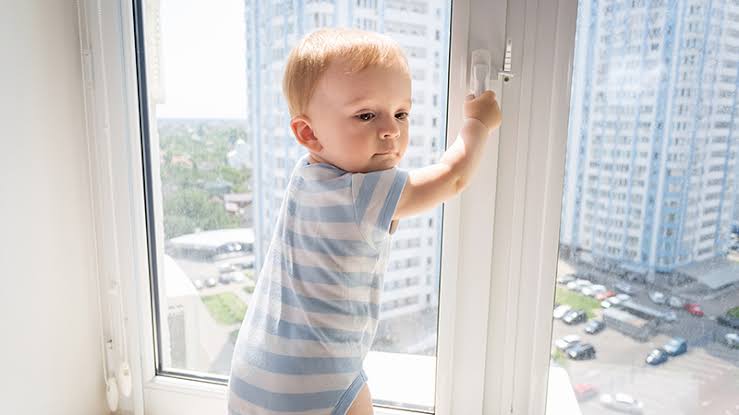
Standard flyscreens should not be treated as a child window safety device. A normal insect screen is designed to keep insects out, not to stop a child falling through a window opening. Yet this question comes up in almost every building we inspect — from committee members, owners and tenants who look at a screened window and reasonably assume it is protected.
The short answer is no. The longer answer, including the one genuine exception, is worth understanding properly, because buildings relying on flyscreens are non-compliant while believing they are safe.
What does the law actually require?
Under section 118 of the Strata Schemes Management Act 2015, NSW owners corporations must have child window safety devices fitted to relevant openable windows — a requirement in force since 13 March 2018.
The standard has two limbs, and a device must satisfy both: it must be capable of restricting the window opening to less than 125mm when engaged, and it must be able to resist an outward force of 250 newtons, roughly equivalent to 25 kilograms pushing against it. The second limb is the one that matters here.
The 250-newton test exists precisely because a child leaning, pushing or falling against a barrier applies real force. A device that limits the opening but gives way under load fails the standard — and failing under load is exactly what an insect screen is built to do.
Why do flyscreens fail both tests?
A standard flyscreen is aluminium or fibreglass mesh in a light frame, held into the window reveal by spring clips or plastic tabs. Consider it against each limb of the standard. Opening restriction: a flyscreen does not restrict the window’s opening at all — the sash behind it still opens fully; the screen just sits across the gap.
Force resistance: the mesh tears and the clips pop out under a fraction of 250 newtons; a determined toddler can dislodge one, which is nothing like resisting the force of a child falling against it. There is no judgement call in this. Fly screens are not an acceptable substitute regardless of their strength or frame construction as ordinary insect screens, and NSW guidance is explicit that insect screens do not qualify.
During an inspection, a screened window with no compliant device behind it is recorded as a defect, every time.
What is the one genuine exception? Engineered security screens
Where the confusion has a kernel of truth: a window with bars, grilles or a security screen can satisfy the requirement — if the screen or barrier itself withstands the 250-newton test and prevents an opening a child could pass through. Purpose-built security screens (heavy-gauge mesh, screwed or bolted into the frame, of the kind sold as forced-entry-rated products) are engineered for exactly this kind of load and may qualify. The distinction is between an insect screen that happens to cover a window and a security barrier engineered and properly fixed to resist force.
If a building wants to rely on security screens for compliance, that reliance should be verified — product documentation checked and the installation physically tested — not assumed because the screen looks sturdy. This is a question we settle during inspections regularly.
What do compliant devices look like?
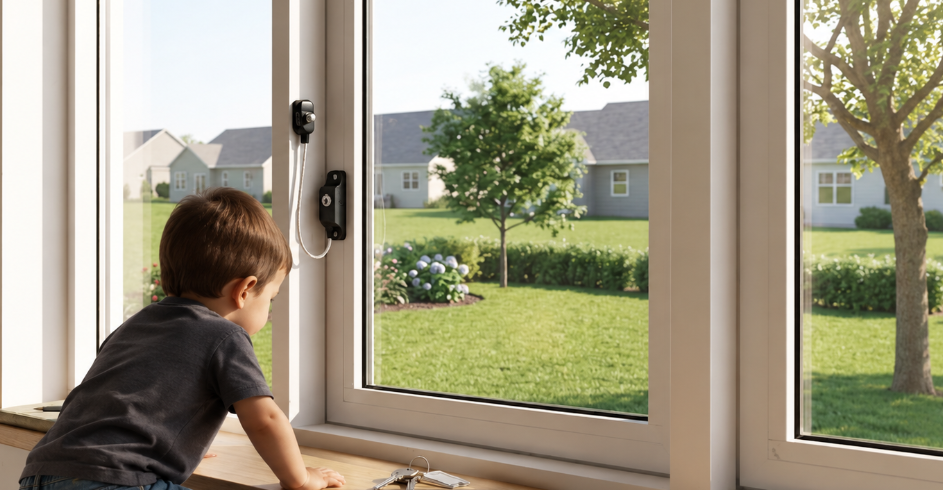
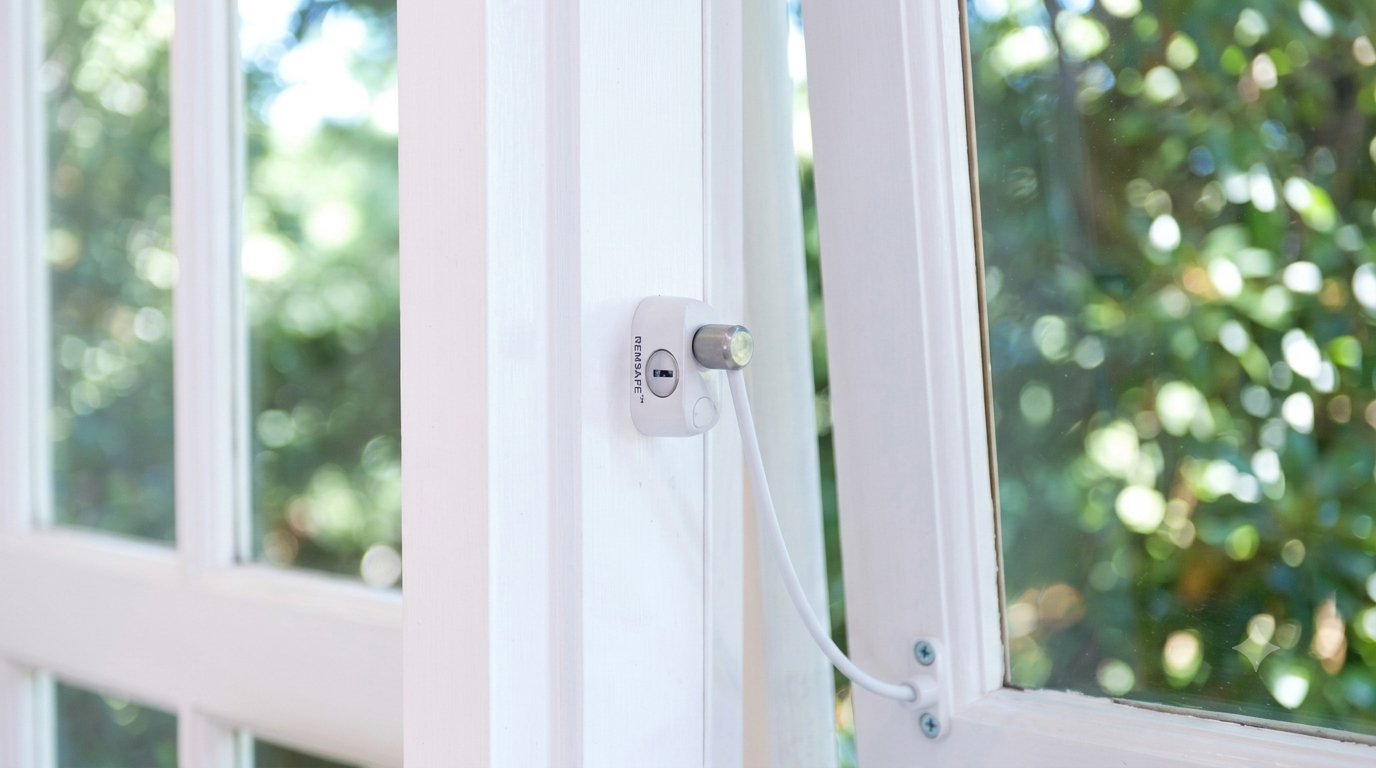
For most windows, compliance comes from purpose-designed hardware: window locks that hold the sash at a restricted opening, cable or chain restrictors limiting travel to less than 125mm, and key-operable restrictors that allow full opening for cleaning or emergency escape when deliberately unlocked by an adult. Haven installs REMSAFE window restrictors, which are key-operable and meet the 250-newton requirement — allowing windows to be opened fully when an adult chooses to, while restricting them reliably the rest of the time.
The right device varies by window type, frame material and use; the standard it must meet does not.
How do you explain this to owners and tenants?
Plain wording works best, and this framing tends to land: ‘The screen on your window keeps insects out. It will not hold a child’s weight — it is not designed to. The law requires a device that stops the window opening more than 125mm and can withstand a hard push.
That is what the restrictor is for, which is why it needs to stay fitted and engaged even though you have a screen.’ Framing it as what the screen is designed for, rather than as a rule being enforced, avoids the argument entirely. This explanation matters most with tenants who remove restrictors because the flyscreen ‘already covers’ the window, and with owners who question why they must pay for devices on screened windows. Both are acting on the same reasonable-sounding, wrong assumption.
Three Scenarios We Keep Seeing
The screened walk-up. A three-storey block where every window has had flyscreens since the 1990s, and the committee genuinely believed the building was covered. Inspection finds no compliant devices anywhere above ground level — the building has been non-compliant since March 2018 without a single person realising.
This is the most common version, and the fix is routine: restrictors installed building-wide, usually in one or two visits. The removed restrictor. A tenant unscrews the restrictor because the window ‘already has a screen’ and ventilation matters more in summer.
Nobody reports it. The gap between what the building’s records say and what is on the window grows until the next physical inspection catches it — which is a large part of why annual inspections exist. The deferred decision.
A committee receives a quote for compliant devices and defers it because the windows ‘have screens and we’ve never had a problem’. That minute, recorded in the AGM materials, is the single worst document a building can own after an incident: it proves the OC understood the question and chose not to act.
Committees should never let that sentence into their minutes.
What should property managers do next?
If any building or property you manage is relying on flyscreens for window safety — or you are not sure what it is relying on — treat that as an open compliance question. Check whether a current inspection record exists that tested devices against the actual standard. If screens are being counted as devices anywhere in the record, or there is no record at all, book an inspection: every relevant window gets physically tested, screens get classified correctly, and anything non-compliant gets photographed, reported and quoted for rectification.
Frequently Asked Questions
No. Standard insect screens, regardless of construction, do not restrict the window opening and cannot resist 250 newtons of force.
They are recorded as non-compliant when relied on as safety devices. Do heavy-duty or pet-mesh screens count? Not by default.
Upgraded insect mesh is still an insect screen. Only an engineered security screen, properly fixed and able to withstand the 250-newton test, can qualify — and that should be verified during inspection, not assumed from appearance.
Yes. Screens and safety devices do different jobs and coexist happily. The restrictor provides compliance; the screen keeps insects out.
In strata buildings, the owners corporation carries the statutory duty for window safety devices.
Defects found during inspection are reported to the OC or its strata manager for rectification.
Get the Question Settled
If flyscreens are doing safety work anywhere in your building’s compliance assumptions, get it checked. Haven Compliance inspects window safety devices across Sydney strata buildings, tests every relevant window against the 125mm and 250N standard, and reports with photographs and clear rectification steps.