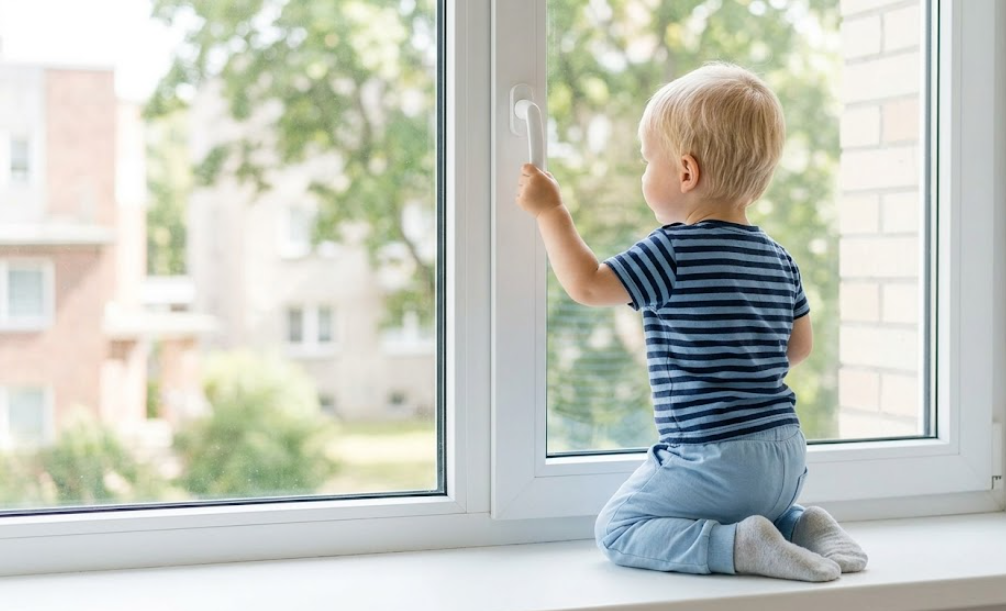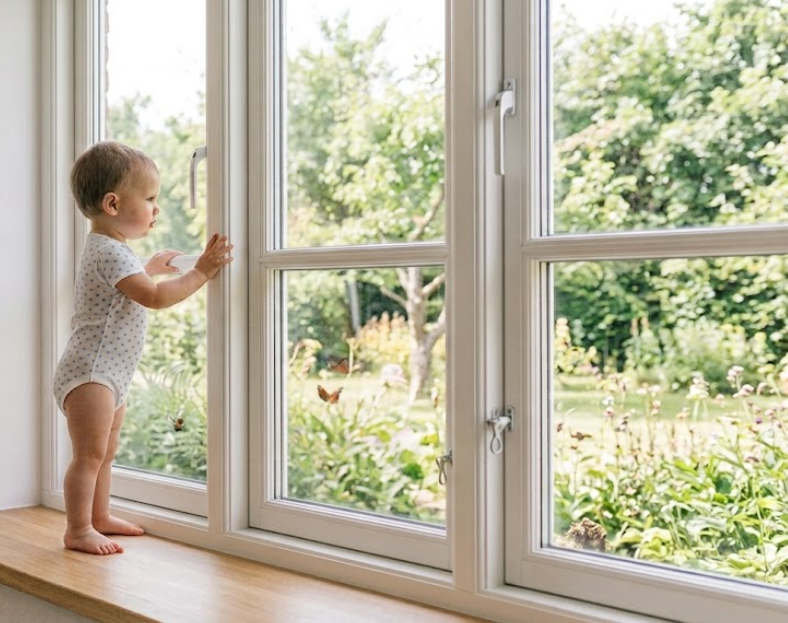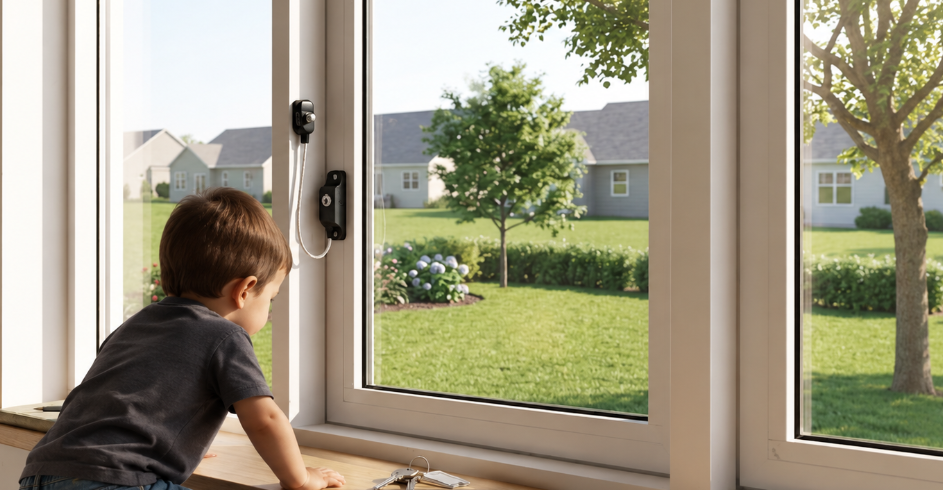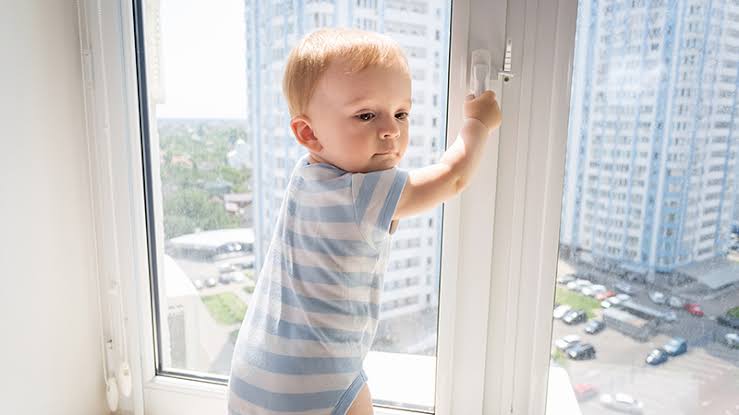
Two numbers appear again and again in NSW child window safety conversations: 125mm and 250N. For property managers, strata managers and owners corporations, understanding these two figures — where they come from, what they actually test, and why both must hold at the same time — is the difference between genuinely assessing a building’s compliance and just admiring its hardware. This article explains both numbers in practical terms, and why neither can be verified from the doorway.
Where do the numbers come from?
The requirements sit under section 118 of the Strata Schemes Management Act 2015 and its regulation, which since 13 March 2018 have required NSW owners corporations to fit child window safety devices to relevant openable windows. The law specifies the performance standard: a device must be capable of restricting the window opening to less than 125mm, and must be able to resist an outward force of 250 newtons. Neither figure is arbitrary.
The 125mm limit comes from child anthropometry — it is the opening size a young child’s body cannot pass through, the same logic used for balustrade and cot-bar spacing. The 250-newton figure, roughly equivalent to 25 kilograms of push, represents the kind of force a child generates leaning, climbing or falling against a barrier. One number stops a child fitting through the gap; the other stops the gap being made bigger.
Compliance is the two working together.
How does the 125mm rule work in practice?
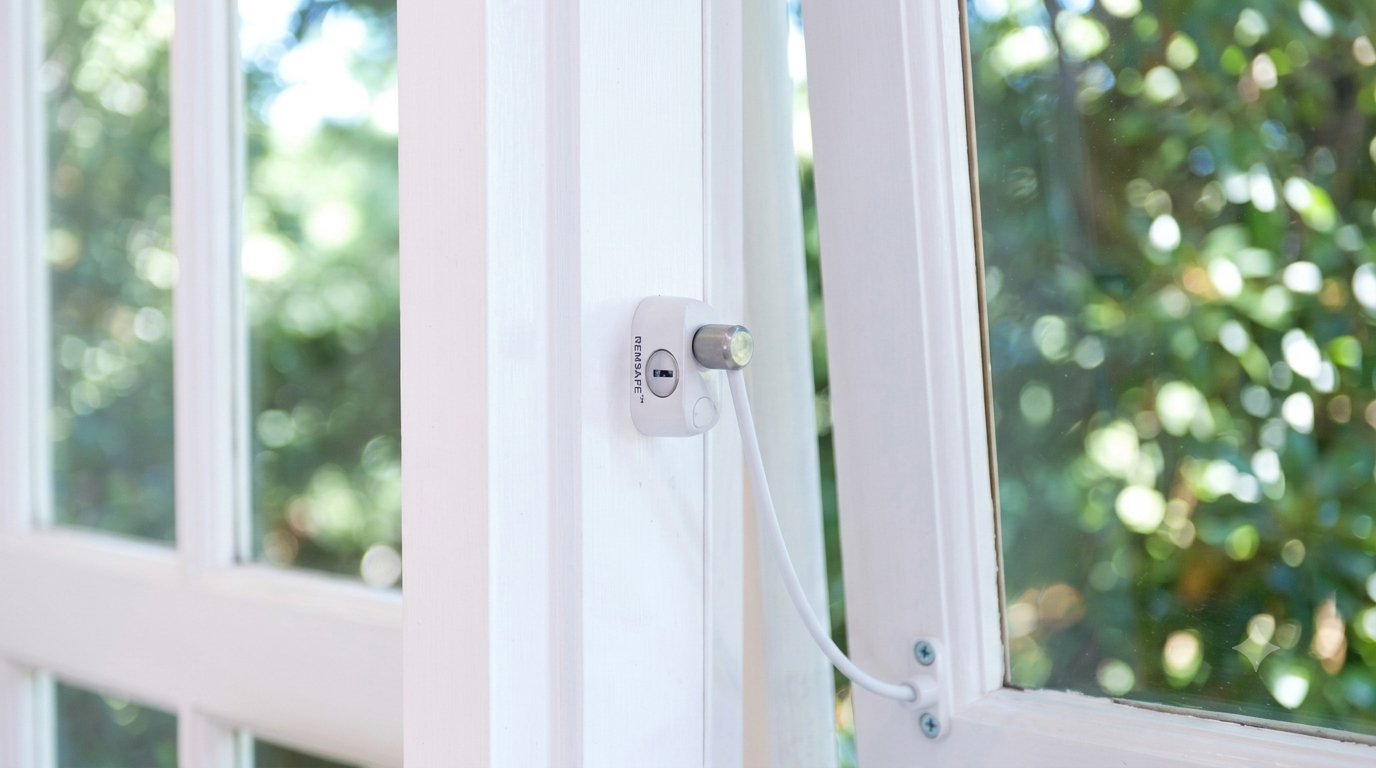
The rule: with the safety device engaged, the window must not open far enough to allow a 125mm sphere to pass through the opening. It is worth being precise, because each part carries weight. ‘Device engaged’ means the limit applies when the restrictor or lock is doing its job — key-operable devices may allow full opening when an adult deliberately unlocks them, which is permitted. ‘The opening’ means the actual clear gap anywhere the sash travels, not a nominal measurement at one point. And ‘must not allow passage’ is a physical test — inspectors verify the standard physically rather than estimating by eye.
In the field, the failures against this limb are rarely about the original installation. They are stretched cables, worn stops, devices refitted in the wrong position after painting or repairs, and sashes that flex enough to open beyond the limit at one end while measuring correctly at the other. All of which pass a glance and fail a test.
How does the 250N test work in practice?
The strength requirement asks a blunter question: when the device is engaged and the window is pushed toward open with 250 newtons of force, does everything hold? That includes the device mechanism itself, its fixings, and the frame material the fixings anchor into. This is why the test matters even for buildings with good hardware: a premium restrictor screwed into rotted timber fails; corroded fixings fail; a device with a fatigued internal mechanism fails — and every one of those failures is invisible until force is applied.
The frame point deserves emphasis. The device needs a sound substrate for the 250N resistance to be achievable. During inspections we regularly find windows where the device is in perfect condition and the frame around it is the defect — water-damaged, split or soft.
Rectifying that window is a carpentry job before it is a hardware job, which is exactly the kind of finding a proper report distinguishes.
Which windows does the rule apply to?
The requirement covers openable windows in strata buildings above the ground floor where the opening is within a child’s reach — broadly, where the internal sill height is less than 1.7 metres from the floor.
Ground-level windows, openings a child cannot reach, and windows that physically cannot open more than 125mm by design fall outside the practical scope, as do windows protected by compliant fixed barriers such as engineered security screens that themselves meet the force requirement. Which windows are in scope for a specific building is a determination worth making once, properly, during an inspection — after which it becomes a stable list the building maintains against.
Why must both numbers pass together?
The two limbs fail independently, which is why neither can be considered in isolation. A window can be restricted to 100mm by a device that pops off under a firm push: the 125mm limb passes, the 250N limb fails, the window is non-compliant. Another window can have a bank-vault-grade lock that, engaged, still permits a 150mm opening: strength passes, restriction fails, non-compliant.
Effective window safety is the combination — a small enough gap, held by a strong enough device, anchored in sound enough material.
Why a Tape-Measure Mindset Is Not Enough
The most common compliance mistake is treating the 125mm figure as the whole standard — walking the building, measuring gaps, and declaring victory. A tape measure captures one limb of the test on one day. It says nothing about force resistance, nothing about fixings or frame condition, and nothing about how the device behaves at the extremes of the sash’s travel.
Devices also deteriorate: they loosen, corrode, and get disengaged by residents, which means the measurement that was true at installation drifts over time. Condition and strength have to be assessed together with the opening limit, window by window, at each inspection — a report from a previous year describes the building as it was, not as it is.
How do inspectors verify the two numbers?
A proper inspection is physical. Each in-scope window is tested with its device engaged: the opening checked against the 125mm standard, the device and fixings assessed for the force requirement, the frame and substrate examined, and the device operated to confirm engagement and, where key-operable, controlled release. Results are recorded per window with photographs of any defect.
What should your report show?
For managers and committees, the report is where the two numbers become usable. It should identify what was inspected area by area and lot by lot, show photographs of each defect, describe device condition in plain language, list the units that could not be accessed, and state recommended actions clearly enough that a committee can approve them without translation. If a report reduces the building to a single ‘compliant’ stamp with no per-window substance, it has not really engaged with either number.
Quick Reference: How Windows Fail the Two Tests
- Fails 125mm: stretched cables or chains; worn or shifted stops; devices refitted incorrectly after painting or repairs; flexible sashes that exceed the limit at one end of travel.
- Fails 250N: loose or corroded fixings; rotted or split frame timber; fatigued device mechanisms; devices anchored into plasterboard or failed substrate.
- Fails both: device missing entirely; device permanently disengaged or removed by residents; the wrong product doing the job — flyscreens, standard latches, or hardware never rated for the standard.
- Passes: a rated device, correctly positioned, engaged, anchored into sound material — verified by physical test, this year.
Frequently Asked Questions
Engaged. The law permits windows that can open fully — key-operable restrictors, for example — provided that with the device engaged the opening cannot exceed 125mm.
Roughly the force of 25 kilograms pushing outward — comparable to a small child’s full weight leaning or falling against the window. It is far more than insect screens or light hardware are built to take, which is why flyscreens never qualify.
No. The requirement has applied to all NSW strata buildings since 13 March 2018 regardless of age. Older buildings actually need more attention, because hardware fatigue and frame deterioration work against both numbers.
You can spot obvious problems — a window opening far past 125mm with its device engaged is certainly a defect.
But you cannot verify force resistance or condition by eye, so a self-check can only ever find non-compliance, never confirm compliance.
Put the Numbers to the Test
If your building has older hardware, no recent inspection record, or a compliance file built on measurements rather than testing, the two numbers in this article are still open questions. Haven Compliance physically tests every relevant window against the 125mm and 250N standard, reports with photographs and per-lot detail, and supports rectification and reinspection so defects are closed with evidence.